
If the term “Artificial Intelligence” brings to mind science fiction movies with sentient robots, you might be surprised to learn that a quieter,
more practical AI revolution is already reshaping how successful medical practices operate.
This technology is no longer a far-off concept for major corporations; it’s rapidly becoming an accessible, powerful, and essential tool for growth-minded clinics.
By 2026, the gap between practices that leverage AI in healthcare marketing and those that don’t will be undeniable. The early adopters won’t just be more efficient; they’ll be more responsive to patient needs, more visible online, and more effective at filling their appointment calendars. Ignoring this shift isn’t just missing out on a trend—it’s risking being outpaced in every aspect of patient acquisition and retention.
But what does this mean for you, the busy clinician? This article will cut through the technical jargon and the futuristic hype. We’ll show you 5 tangible, game-changing AI tools that are already proving their worth and are set to become the new standard for top-performing healthcare practices.

Beyond the Hype: What AI Actually Means for Your Practice
Let’s demystify the term. In the context of your clinic, think of AI not as a replacement for human expertise, but as the most powerful assistant you’ve ever had. It’s a system designed to handle repetitive tasks, analyze complex data at lightning speed, and execute marketing strategies with a precision that frees up your team to focus on what truly matters: providing exceptional patient care.
This is the future of medical practice automation. It’s about creating a practice that is smarter, more efficient, and profoundly more patient-centric.
The 5 AI Tools Your Clinic Needs to Know About
1. The 24/7 AI Receptionist: Intelligent Chatbots
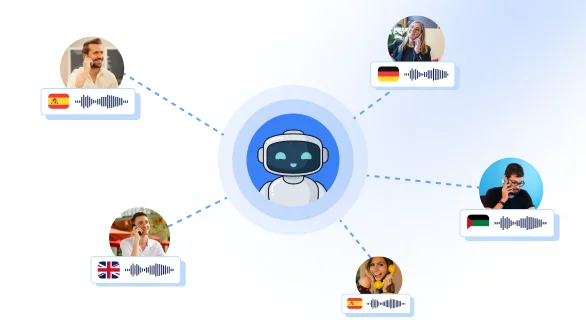
What It Is: These aren’t the clunky, frustrating chatbots of the past. Modern, HIPAA-compliant chatbots for clinics are sophisticated AI-powered conversational tools that live on your website and act as an extension of your front desk.
Why It’s a Game-Changer: Your front desk staff can’t work around the clock, but your website can. An AI chatbot can instantly answer the most common patient queries—”Are you open on Saturdays?”, “Do you accept my insurance?”, “Is there parking available?”—at 2 AM on a Tuesday. More importantly, it can guide potential patients through the booking process, check your calendar availability in real-time, and schedule an appointment without any human intervention. This means you are capturing new patient leads while your competitors are relying on an answering machine.
Real-World Example: A worried parent is searching online for a pediatric dentist at 10 PM after their child has a minor accident. They land on your website. The AI chatbot immediately engages, confirms that you handle pediatric emergencies, and helps them book the first available slot the next morning. You’ve secured a new patient and provided peace of mind, all while your office was closed.
Tools
- Tidio: A very popular platform that combines live chat with an AI-powered chatbot called Lyro. It’s known for its user-friendly setup and can be configured for HIPAA compliance, making it a great starting point for many clinics.
- Mend: This is a healthcare-specific patient engagement platform. Its AI chatbot is designed from the ground up for medical workflows, handling tasks like patient intake, appointment scheduling, and automated reminders within a secure, HIPAA-compliant environment.
- Drift: A premium, enterprise-level conversational marketing tool that offers a robust HIPAA-compliant plan. It’s ideal for larger practices or hospital groups looking for advanced automation and integration with their patient management systems.
2. The AI Content Assistant: Generative AI for Patient Education
What It Is: You’ve heard of ChatGPT, but the next wave of generative AI tools (like Jasper or Copy.ai) are becoming highly adept at assisting in the creation of specialized content. When guided by expert prompts, these tools can help generate first drafts of blog posts, social media updates, email newsletters, and patient-education materials.
Why It’s a Game-Changer: “Writer’s block” is a major reason clinic blogs and social media feeds go stale. AI can act as a powerful brainstorming partner and drafting assistant. It can summarize a dense clinical study into patient-friendly bullet points or structure a blog post about a common condition, saving your team countless hours.
Real-World Example: You want to write a comprehensive blog post on “Managing Osteoarthritis of the Knee.” You provide the AI with your key clinical insights, the target audience (e.g., adults over 50), and your unique treatment philosophy. Within minutes, it generates a well-structured draft, complete with headings and FAQs. You then spend 30 minutes refining, editing, and injecting your expert voice, instead of spending three hours staring at a blank screen. Crucially, the AI creates the scaffold; your medical expertise provides the accuracy, empathy, and final sign-off.
Tools
- Jasper (formerly Jarvis): A market leader in AI writing. It offers numerous templates for blog posts, social media captions, and ad copy. Its “Brand Voice” feature can be trained to write in your clinic’s specific tone.
- Copy.ai: Known for its ease of use and creative outputs, making it excellent for brainstorming social media ideas and writing engaging email newsletters for patients.
- ChatGPT-4o (and future versions): The most versatile tool for summarizing complex medical topics into patient-friendly language, creating detailed outlines for educational content, and brainstorming ideas. (Important Note: All AI-generated content must be fact-checked, edited, and approved by a qualified medical professional before publishing.)
3. The Hyper-Efficient Ad Manager: Predictive AI Analytics
What It Is: The AI algorithms already built into advertising platforms like Google Ads and Meta (Facebook/Instagram) are becoming incredibly sophisticated. These systems analyze thousands of data points in real-time to optimize your advertising budget for maximum return on investment (ROI).
Why It’s a Game-Changer: Gone are the days of manually guessing which ad headline or image will resonate with patients. AI-powered ad platforms run thousands of micro-experiments simultaneously. They can predict which audience segments are most likely to book a consultation, automatically shift your budget towards the best-performing ad creative, and adjust bidding strategies based on the time of day and user device. This is the essence of data-driven AI for doctors who demand a clear return on their marketing spend.
Real-World Example: You’re running a Google Ads campaign for dental implants. The AI tests four different headlines. It quickly learns that “Permanent Solution for Missing Teeth” gets a 25% higher click-through rate from men aged 55-70 than “Restore Your Smile.” It then automatically prioritizes showing that headline to that specific demographic, drastically lowering your cost per lead without you needing to analyze a single spreadsheet.
Tools
- Google Ads (Performance Max): This isn’t a separate tool, but rather the powerful AI built directly into the Google Ads platform. Performance Max campaigns use AI to automate targeting, bidding, and ad creation across all of Google’s channels to find the most cost-effective path to new patient inquiries.
- Meta Ads (Advantage+ Campaigns): Similar to Google, this is Meta’s native AI suite. Advantage+ automates audience targeting and ad delivery on Facebook and Instagram, analyzing user behavior to show your ads to people most likely to book an appointment.
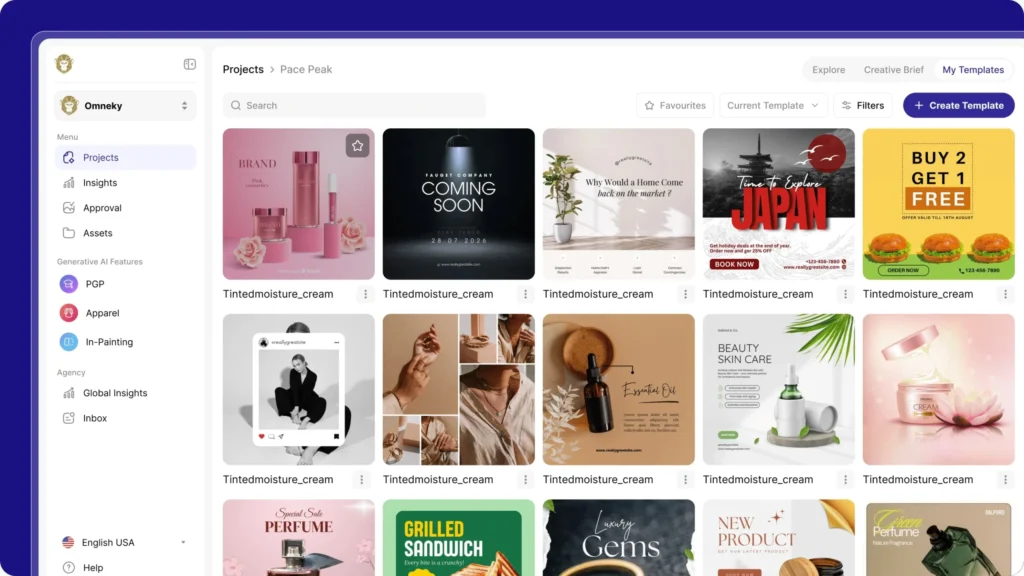
- Omneky: A third-party platform that plugs into your ad accounts. It uses AI to generate ad creatives (images and text) at scale and provides deeper analytics to predict which ad variations will perform best, helping to prevent ad fatigue.
4. The Patient Experience Analyst: AI-Powered Sentiment Analysis
What It Is: Your online reviews are a goldmine of data. AI-powered reputation management platforms (like those offered by Birdeye or Podium) use Natural Language Processing (NLP) to scan and analyze hundreds of patient reviews from Google, Healthgrades, and other sites.
Why It’s a Game-Changer: This technology moves far beyond a simple star rating. It identifies recurring themes, keywords, and “sentiment” (positive, neutral, negative) in your patient feedback. It can tell you, with data, that 70% of your positive reviews mention “friendly staff” while 20% of your negative reviews mention “long wait times.” This provides clear, actionable insights to improve your operations and overall patient experience.
Real-World Example: Your AI dashboard reveals a trending negative sentiment around the “billing process.” Patients are happy with the clinical care but find the billing confusing. This is a crucial insight that a simple 4.5-star rating would completely hide. Armed with this data, you can simplify your invoices or create a helpful FAQ page, directly addressing a key point of friction in the patient journey.
Tools
- Birdeye: A top-tier reputation management platform that uses AI (Natural Language Processing) to analyze all your online reviews. It identifies trends and keywords (e.g., “long wait times,” “friendly staff,” “billing issues”) to give you actionable insights into your patient experience.
- Podium: A direct competitor to Birdeye, Podium also uses AI to analyze patient feedback from reviews and text messages. It excels at turning insights into action, for example, by automatically sending review requests after a positive interaction is detected.
- Reputation: An enterprise-grade platform used by large healthcare systems. It provides extremely deep sentiment analysis across reviews, social media, and patient surveys, allowing clinics to benchmark their performance against competitors.
5. The SEO Strategist: AI-Driven Content Optimization
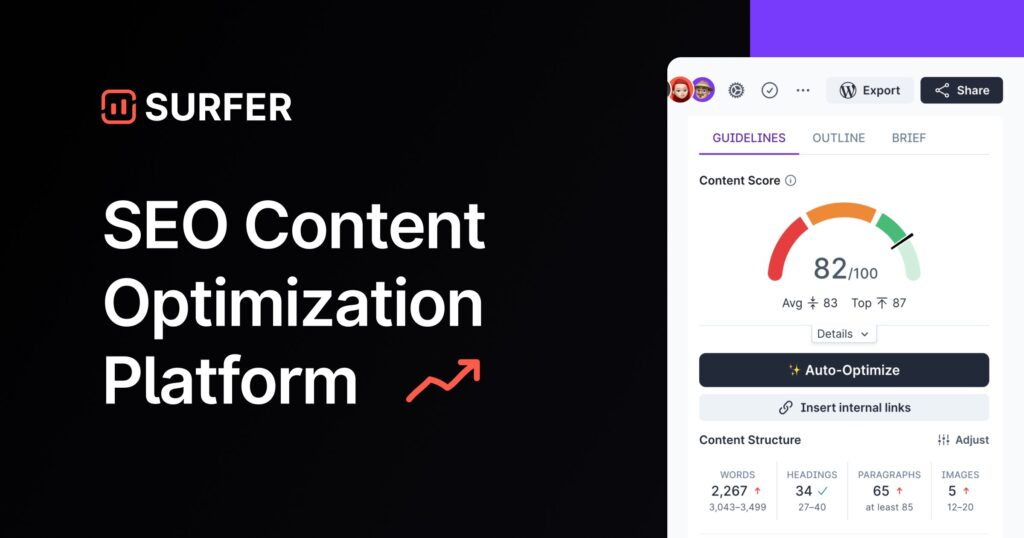
What It Is: Modern SEO is a highly competitive field. AI-driven tools like SurferSEO or MarketMuse are changing the game by analyzing the top-ranking pages on Google for any given topic and providing a data-backed roadmap for creating content that can outperform them.
Why It’s a Game-Changer: It removes the guesswork from your content strategy. Before you write a single word for your new service page on “Physiotherapy for Sciatica,” the AI will analyze the top 10 competitors. It will give you a content brief detailing the optimal word count, the key topics you must cover, the specific patient questions you need to answer, and related keywords to include.
Real-World Example: The AI analysis shows that all the top-ranking articles for sciatica treatment include a section on “at-home exercises” and answer the question “How long does recovery take?” Your article, therefore, is structured to include these elements from the start, giving it a significantly higher chance of ranking on the first page of Google and attracting organic patient traffic.
Tools
- Surfer SEO: A very popular content intelligence tool that helps you write articles and service pages that are optimized to rank on Google. It analyzes top-ranking content and gives you a real-time score and a data-driven checklist of keywords and topics to include.
- MarketMuse: An advanced AI-powered content strategy tool. It analyzes your entire website to find “content gaps” and opportunities to build topic authority, providing detailed briefs to help you become the go-to expert resource in your local area.
- Semrush: While a comprehensive SEO toolkit, Semrush has heavily integrated AI features, including a Content Outline builder and an AI Writing Assistant that helps you craft SEO-friendly content based on competitor data.
The Human Element: AI is a Tool, Not a Replacement
It is vital to understand that none of these tools can replace the most important element of your practice: your team’s human expertise, empathy, and clinical judgment. As a healthcare professional, your ability to connect with a patient, understand their concerns, and provide compassionate care is irreplaceable.
The best results, as confirmed by leading tech analysts at Gartner, come from a “human-in-the-loop” approach. Technology handles the data, the automation, and the repetitive tasks, empowering clinicians to do what they do best.
Don’t Get Left Behind in the AI Revolution
The adoption of AI in healthcare marketing isn’t a question of if, but when. The practices that embrace these tools will build a powerful competitive moat, making them more efficient, more profitable, and more attractive to modern patients.
However, choosing, integrating, and managing these powerful tools requires specialized technical and marketing expertise. You’re an expert in healthcare, not in AI integration and digital strategy.
Don’t get left behind. Rehabitize integrates the latest marketing technology to keep your practice ahead of the curve. We help you leverage the power of AI to attract more patients, streamline your operations, and build a truly future-proof practice.