
Are your staff drowning in paperwork and repetitive tasks? Imagine a clinic where efficiency is effortless, where patient interactions are seamless, and where your team can dedicate their energy to what truly matters: providing exceptional care. This isn’t a futuristic fantasy; it’s the present-day reality for clinics embracing artificial intelligence (AI) and automation.
For many, the terms “AI” and “automation” conjure images of complex, expensive systems or even job displacement. But for healthcare, AI is rapidly proving to be a powerful, practical ally. It’s here to take on the mundane, to analyze vast amounts of data, and to free up your human team to focus on compassion and complex decision-making.
This guide dives into practical ways AI & automation for clinics aren’t just futuristic concepts, but actionable tools for your practice today, helping you move from overwhelmed to optimized.
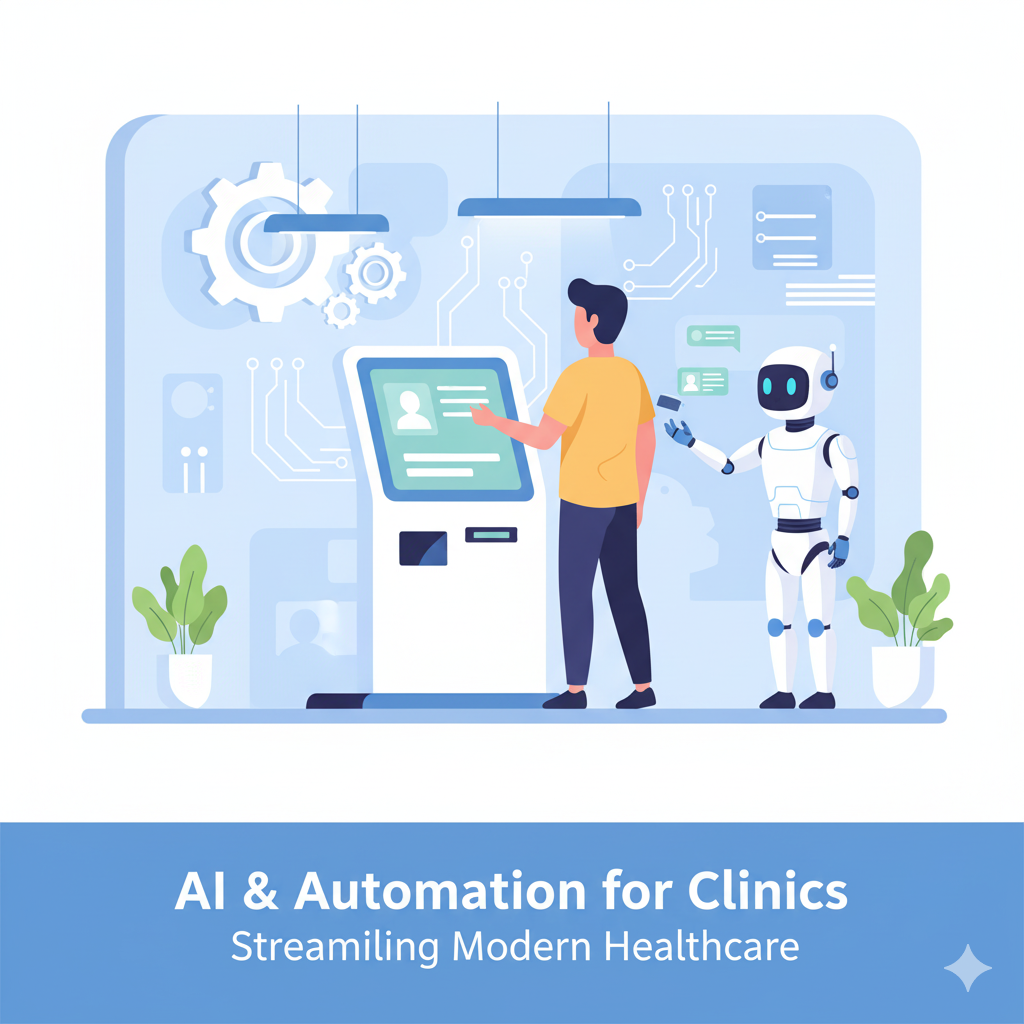
The Hidden Costs of Manual Clinic Operations
Before we look forward, let’s acknowledge the current landscape. Many clinics still rely heavily on manual processes for everything from appointment scheduling to insurance verification. While familiar, this approach comes with significant, often unquantified, costs.
The Drain on Staff Time and Resources
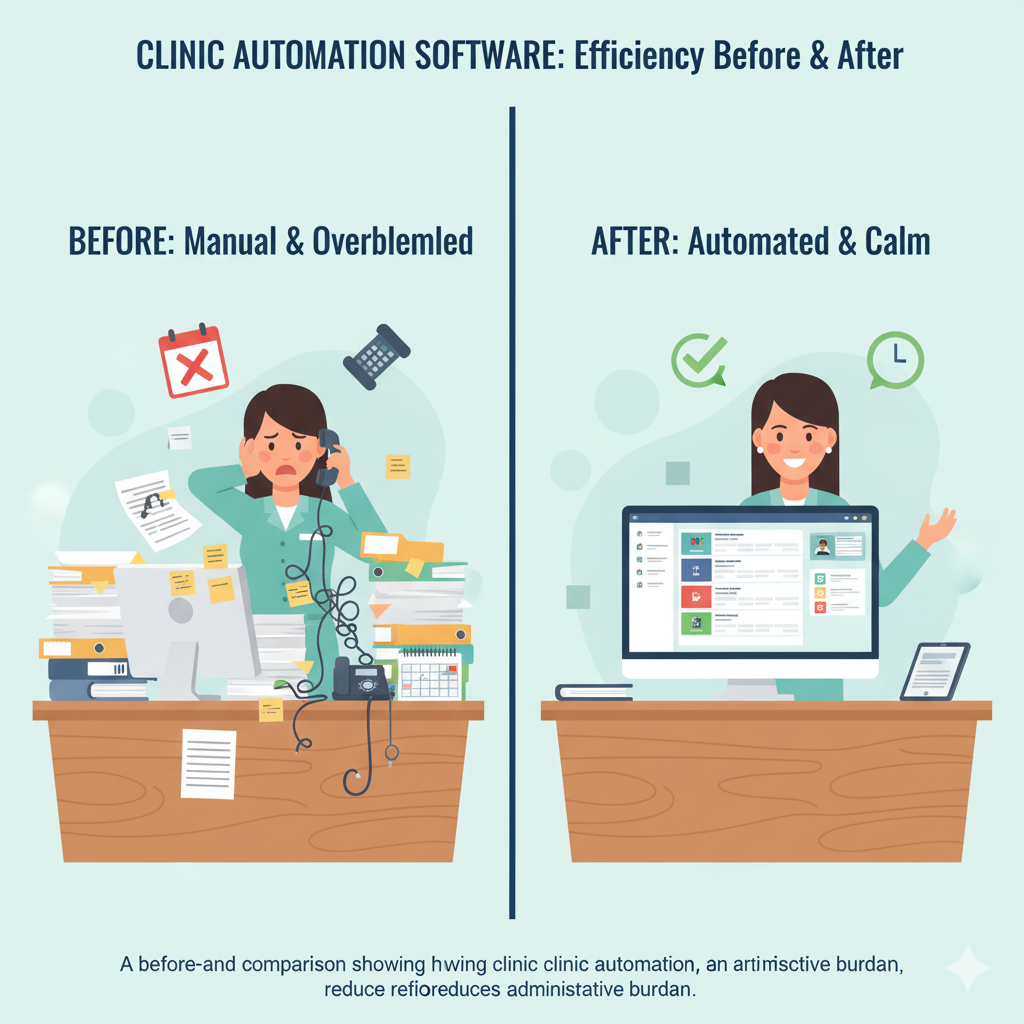
Consider the daily grind: dozens of phone calls for scheduling, countless hours spent on data entry, chasing down patient forms, and navigating complex billing inquiries. These repetitive, administrative tasks consume a disproportionate amount of staff time, diverting their energy from patient engagement and more strategic work.
- Time Sink: Industry reports often highlight that administrative tasks can account for 20-30% of a healthcare professional’s day. Imagine reclaiming even half of that.
- Increased Errors: Manual data entry is prone to human error, leading to inaccuracies in patient records, billing, and scheduling.
- Staff Burnout: The constant pressure of managing a high volume of repetitive tasks contributes to stress, dissatisfaction, and ultimately, burnout among your valuable team members.
Impact on Patient Experience & Waiting Times
The inefficiencies of manual operations directly translate into a diminished patient experience.
- Longer Wait Times: Whether on the phone, in the waiting room, or for appointment availability, patients often face frustrating delays. A study published by Vitals revealed that long wait times are a top patient complaint.
- Frustration and Dissatisfaction: Repeating information, filling out endless forms, and dealing with complex billing inquiries can make patients feel like a number, rather than a valued individual.
- Lost Patients: In today’s competitive landscape, a poor administrative experience can be enough for a patient to seek care elsewhere.
AI & Automation for Clinics: Your Blueprint for Efficiency
The good news is that practical solutions exist. AI & automation for clinics can transform these challenges into opportunities for seamless operation and enhanced care.
Revolutionizing Patient Scheduling & Reminders
One of the biggest areas for immediate impact is appointment management.
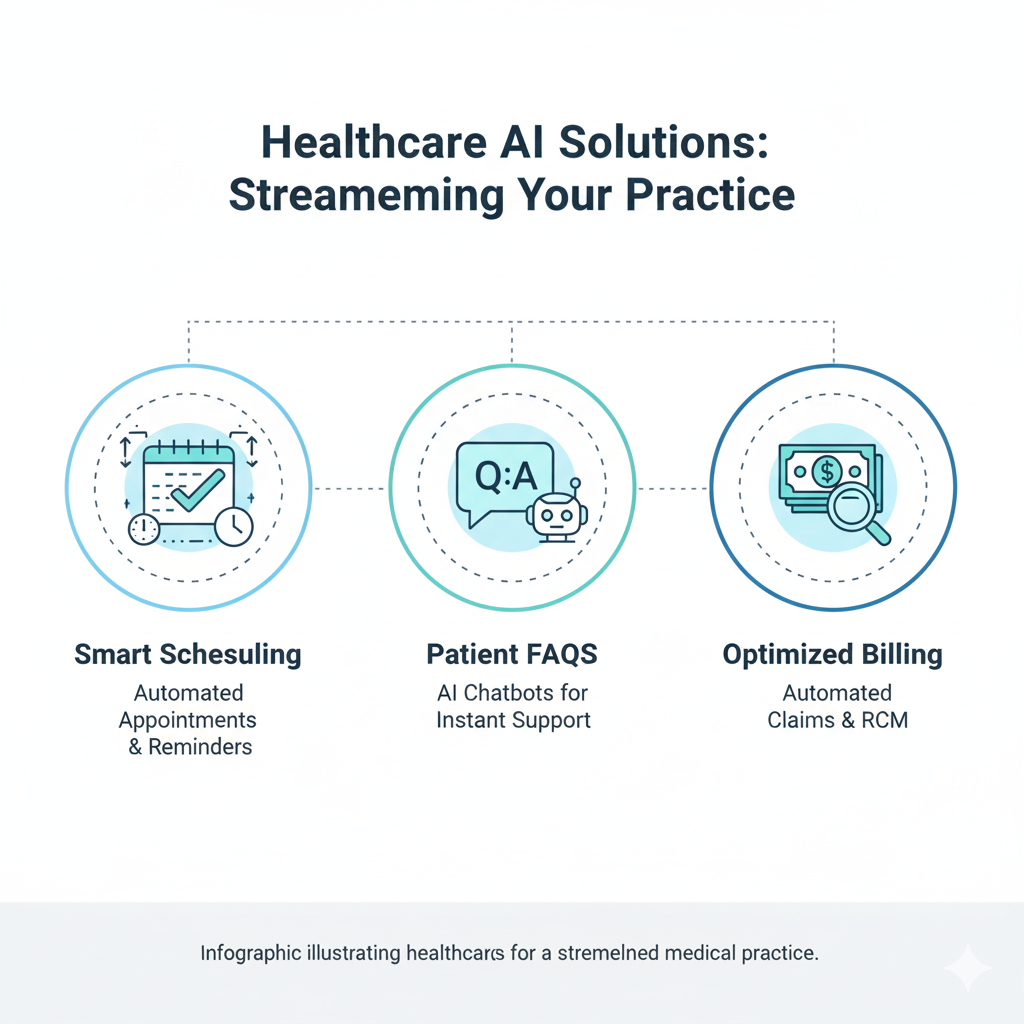
- AI-Powered Scheduling Assistants: Imagine a system that intelligently books, reschedules, and optimizes your clinic’s calendar, taking into account physician availability, patient preferences, and even specific visit types. This type of clinic automation software can proactively suggest optimal slots.
- Automated, Personalized Reminders: Go beyond generic texts. AI can send smart, personalized reminders via SMS, email, or even automated calls, drastically reducing no-shows and ensuring patients are prepared for their appointments.
- Self-Service Options: Empower patients to book and manage their appointments online, reducing phone call volume and improving convenience.
Streamlining Administrative Tasks & Front Desk Operations
The front desk is often the first and most critical point of contact. Automation can elevate this experience.
- Automated Patient Intake: Replace paper forms with digital, pre-filled forms that patients can complete before their visit, directly integrating into your EHR system. This is a core benefit of AI & automation for clinics.
- AI Chatbots for FAQs: Deploy AI-powered chatbots on your website or patient portal to instantly answer common questions about hours, services, insurance, or even provide basic symptom guidance, freeing up your staff.
- Automated Insurance Verification: Systems can automatically check eligibility and benefits, reducing manual errors and speeding up the pre-authorization process.
Optimizing Billing & Revenue Cycle Management
The financial health of your clinic depends on an efficient billing process. AI and automation can significantly improve accuracy and speed.
- Automated Coding Suggestions: AI can analyze clinical notes and suggest appropriate CPT and ICD-10 codes, reducing manual review time and coding errors.
- Streamlined Claim Submission: Automated systems ensure claims are submitted accurately and on time, minimizing rejections.
- Denial Management: AI can help identify patterns in denied claims, suggesting adjustments to prevent future issues and thereby boosting your clinic’s financial performance.
Enhancing Patient Experience with Healthcare AI Solutions
While AI handles the ‘tasks,’ its ultimate goal is to free up humans to deliver better, more personalized care.
Personalized Communication & Support
Patients appreciate feeling seen and understood. AI can facilitate this at scale.
- AI-Driven Follow-ups: Automated, yet personalized, messages can be sent post-visit with specific instructions, educational content, or even check-ins on recovery, enhancing patient engagement.
- Virtual Assistants: Provide patients with a virtual guide to navigate your services, prepare for procedures, or understand post-care instructions, offering support on their terms.
Faster Access to Care & Information
The immediate gratification offered by AI-powered tools significantly improves the patient journey.
- Reduced Friction: Patients can get answers to their questions or book appointments without navigating phone trees or waiting on hold.
- Empowered Patients: Providing easy access to information empowers patients to be more involved in their own healthcare decisions.
Data-Driven Insights for Better Care
Beyond direct automation, AI excels at processing vast amounts of data to provide actionable insights.
- Predictive Analytics: AI can analyze patient data to identify individuals at higher risk for certain conditions, allowing for proactive outreach and preventative care.
- Operational Intelligence: Understand patient flow, peak times, and staffing needs better, allowing you to fine-tune your operations for maximum efficiency and an improved patient experience. These healthcare AI solutions move your clinic towards true data-driven decision-making.
Implementing AI & Automation in Your Practice: A Practical Approach
Embracing new technology doesn’t have to be overwhelming. A phased, strategic approach works best.
Start Small: Identify Key Pain Points
Don’t attempt a full overhaul all at once. Pinpoint the areas in your clinic that cause the most frustration or consume the most manual hours.
- High-Impact Areas: Is it scheduling? Patient intake? Billing inquiries? Focus your initial AI & automation for clinics efforts on these specific bottlenecks.
- Pilot Programs: Implement a new tool in one department or for a specific task first, gathering feedback before a wider rollout.
Choosing the Right Clinic Automation Software
The market for healthcare AI and automation is growing. Look for solutions that:
- Integrate Seamlessly: With your existing Electronic Health Record (EHR) and Practice Management System (PMS).
- Are Secure & Compliant: HIPAA compliance is non-negotiable.
- Are User-Friendly: For both your staff and your patients.
- Offer Scalability: Can grow with your practice.
Training & Change Management for Your Team
Technology is only as good as the people using it.
- Address Concerns: Be transparent about how AI and automation will affect roles. Frame it not as job replacement, but as “assistant AI” that frees staff from drudgerous tasks, allowing them to focus on higher-value patient interactions.
- Comprehensive Training: Provide thorough training and ongoing support.
- Foster Champions: Identify early adopters within your team who can become internal advocates and mentors for new tools.
The Future is Now: Streamline Medical Practice with AI & Automation
The administrative burden in healthcare is unsustainable. AI & automation for clinics offer a compelling pathway to a more efficient, patient-centric, and sustainable future. By strategically implementing these technologies, you’re not just cutting costs or saving time; you’re transforming your entire operational framework. You’re empowering your staff, delighting your patients, and future-proofing your practice in a rapidly evolving healthcare landscape.
Embracing AI and automation isn’t about becoming a ‘robot clinic.’ It’s about harnessing intelligent tools to enhance the human element of care, allowing your team to focus on compassion, connection, and complex problem-solving. It’s about creating a truly streamlined medical practice that thrives.
Ready to transform your clinic’s efficiency and free up your team for what matters most? Don’t let administrative burden hold your practice back. Partner with Rehabitize to explore tailored AI & automation solutions that streamline your operations and drive growth.
Talk to Rehabitize today and get your free practice growth plan!
Frequently Asked Questions (FAQ)
Q1: Is AI in healthcare expensive for small clinics?
A1: Not necessarily. While some enterprise-level solutions can be costly, many affordable, modular clinic automation software options exist for specific tasks like scheduling or patient communication. The ROI from reduced errors and saved staff time can quickly offset the investment.
Q2: Will AI replace my clinic staff?
A2: The goal of AI & automation for clinics is typically to augment, not replace, human staff. AI handles repetitive, rule-based tasks, freeing your team to focus on complex problem-solving, empathy, and direct patient interaction—aspects that AI cannot replicate.
Q3: How secure are healthcare AI solutions?
A3: Reputable healthcare AI solutions and automation platforms prioritize security and are built with HIPAA compliance in mind. When choosing a vendor, always verify their security protocols, data encryption, and compliance certifications to ensure patient data is protected.