
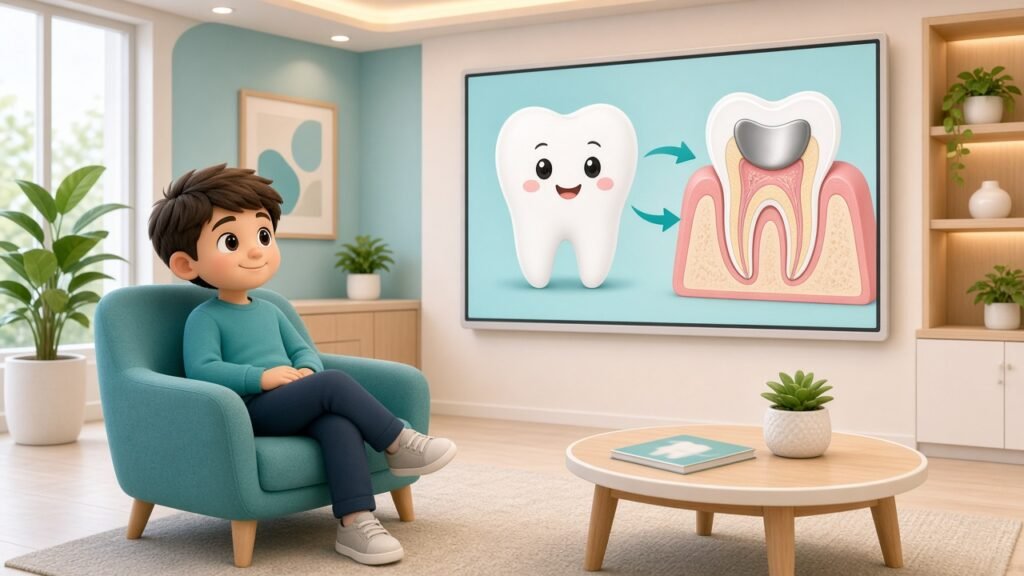
In my physio clinic, I’ve lost count of the patients who tensed up before I’d even touched them. Not because anything hurt yet, but because they didn’t know what was coming. The moment I explained the next five minutes in plain words, their shoulders dropped. Dentistry has the same problem, only bigger. Plenty of people would rather put up with a toothache for months than sit in that chair without knowing what’s about to happen.
That’s where dental patient education videos for clinics come in. Not glossy adverts. Short, calm explainers that show a patient what a procedure actually involves, step by step, before they ever lie back and open wide. Done well, they can take a lot of the fear out of the unknown. Done badly, with graphic footage or big promises, they can make things worse.
Here’s how I’d think about it if I ran a dental practice.
Why the unknown is often scarier than the procedure
Ask an anxious patient what they’re worried about and you’ll rarely hear “the drill” on its own. You’ll hear things like “I don’t know how long it takes”, “Will I feel it?”, “What if they find something worse?” or “I don’t know what a root canal even is.” Most of that is uncertainty, not pain.
Uncertainty is something you can actually fix. You can’t make an injection feel like nothing, but you can show someone what’s going to happen, in what order, and why. A patient who knows the steps has something to hold on to. They can count through them. They know when the hard bit is over.
Your team already does this verbally, of course. The trouble is that verbal explanations happen at the worst possible time: in the chair, with a bright light in their face, when they’re already nervous and only half listening. A short video watched at home, or in the waiting room, gets the message in earlier and more calmly.
Why animation works better than real footage
Some clinics try to solve this by filming a real procedure. I understand the thinking, but for an anxious patient, close-up footage of blood, instruments and an open mouth is the last thing they want to see. It can confirm every fear they had.
Animation gets around that. A clean 3D model of a tooth can show what a filling does, how a crown fits, or what happens inside a root canal, without anything that looks like a real mouth on a real day. You can slow things down, cut away layers, and zoom inside the tooth in a way a camera simply can’t. Patients get the “aha” without the wince.
It also helps with understanding, not just comfort. A patient who can actually see why an infected nerve needs cleaning out is far more likely to accept the treatment plan than one who’s just been told “you need a root canal.” That’s the kind of work we do with our Pixar-style 3D medical animations, where friendly visuals carry a clear, accurate explanation.
Which procedures to start with
You don’t need a video for everything on day one. Start with the treatments that cause the most questions, the most nerves, or the most “I’ll think about it” replies at the front desk. For most general practices, that list looks something like this:
- Root canal treatment. Probably the most feared phrase in dentistry, and usually misunderstood.
- Extractions, especially wisdom teeth.
- Fillings, for first-timers and for nervous children and parents.
- Crowns and bridges, where patients often don’t understand the two visits.
- Implants, which involve several stages over months and benefit hugely from a visual timeline.
- Scale and polish or deep cleaning, for patients who’ve avoided the dentist for years and feel embarrassed.
Pick two or three. Look at which ones your team spends the most time explaining, or which ones patients most often postpone. Those are your first scripts.
What a good explainer actually covers
The best patient videos I’ve seen follow a simple pattern. They answer the questions a nervous patient is too shy to ask out loud. Keep each one short, ideally 60 to 90 seconds, and walk through it in this order:
- What it is. One or two sentences in everyday words. “A root canal cleans out the soft inside of a tooth when it’s infected or inflamed.”
- Why you might need it. Show the problem inside the tooth, simply.
- What happens, step by step. Numbing, the steps of the procedure, and the finish. Keep it visual and calm.
- What you’ll feel. Be honest. Pressure, vibration, a numb lip afterwards. Don’t promise “completely painless.”
- How long it takes. Roughly, and whether there’s more than one visit.
- Afterwards. What’s normal, what to avoid, and when to call the clinic.
That’s it. No dramatic music, no countdown timers, no “you won’t believe” hooks. A calm voice and clear visuals do the work.
A note on tone
Write the script the way your nicest hygienist talks to a nervous patient. Short sentences. Reassuring but not patronising. Avoid words like “drill”, “needle” and “cut” where a gentler, accurate alternative exists, but never hide what’s really happening. Patients can tell when they’re being managed, and it backfires.
Be careful with promises
This is where a lot of dental marketing goes wrong. It’s tempting to add lines like “pain-free guaranteed” or “a perfect smile in one visit.” Apart from being hard to back up, claims like that can run into trouble with health advertising rules in many countries, and they set patients up for disappointment.
Stick to what’s generally true. Say that most people find it more comfortable than they expected, rather than promising it won’t hurt. Say that recovery time varies, rather than “back to normal tomorrow.” Don’t use before-and-after shots or patient stories in these videos unless you’ve checked they’re allowed where you practise, and you have proper consent.
Please note: this is general guidance, not legal or clinical advice. Advertising and patient-information rules differ between countries and professions, so check with your own dental regulator or professional body before publishing any patient-facing content. And always have a dentist sign off the clinical accuracy of every script.
Where to use the videos so patients actually watch them
A great video sitting in a folder helps nobody. The trick is to put it in front of patients at the moment their worry starts, which is usually right after booking, not in the chair.
- Booking confirmation messages. When someone books a root canal, send the root canal explainer with the confirmation. It’s the single most useful place for it.
- Treatment plan follow-ups. After a consultation, send the video for each recommended procedure so patients can rewatch it with their family.
- Your website. Add each video to the matching treatment page, near the top, so people researching at 11 pm get a calm answer.
- The waiting room screen. Swap the TV news for a gentle loop of your explainers, with the sound low and captions on.
- Social media. Short cuts of the same videos work well as educational posts, and they show your clinic as the calm, clear one.
Always add captions. Lots of people watch on mute, and it helps patients who are hard of hearing or more comfortable reading in a second language.
A simple way to get started this month
If this feels like a big project, it doesn’t need to be. Here’s a practical first step:
- Ask your front desk and dentists which procedure causes the most nervous questions. Write those questions down word for word.
- Turn those questions into a short script using the six-part structure above.
- Have a dentist check it for accuracy and remove anything that over-promises.
- Produce one animated explainer, roughly a minute long.
- Send it with every booking for that procedure for a couple of months, and ask your team whether patients seem calmer or ask fewer of the same questions.
Then do the next one. A small library of five or six explainers covers most of what anxious patients worry about, and it keeps working for you every day.
Want help building your patient video library?
If you’d like friendly, accurate procedure explainers for your dental clinic, have a look at our 3D medical animation work. Or, if you’re still working out where videos fit into your wider marketing, grab our Free Marketing Blueprint or get in touch. We’ll talk it through, no pressure.